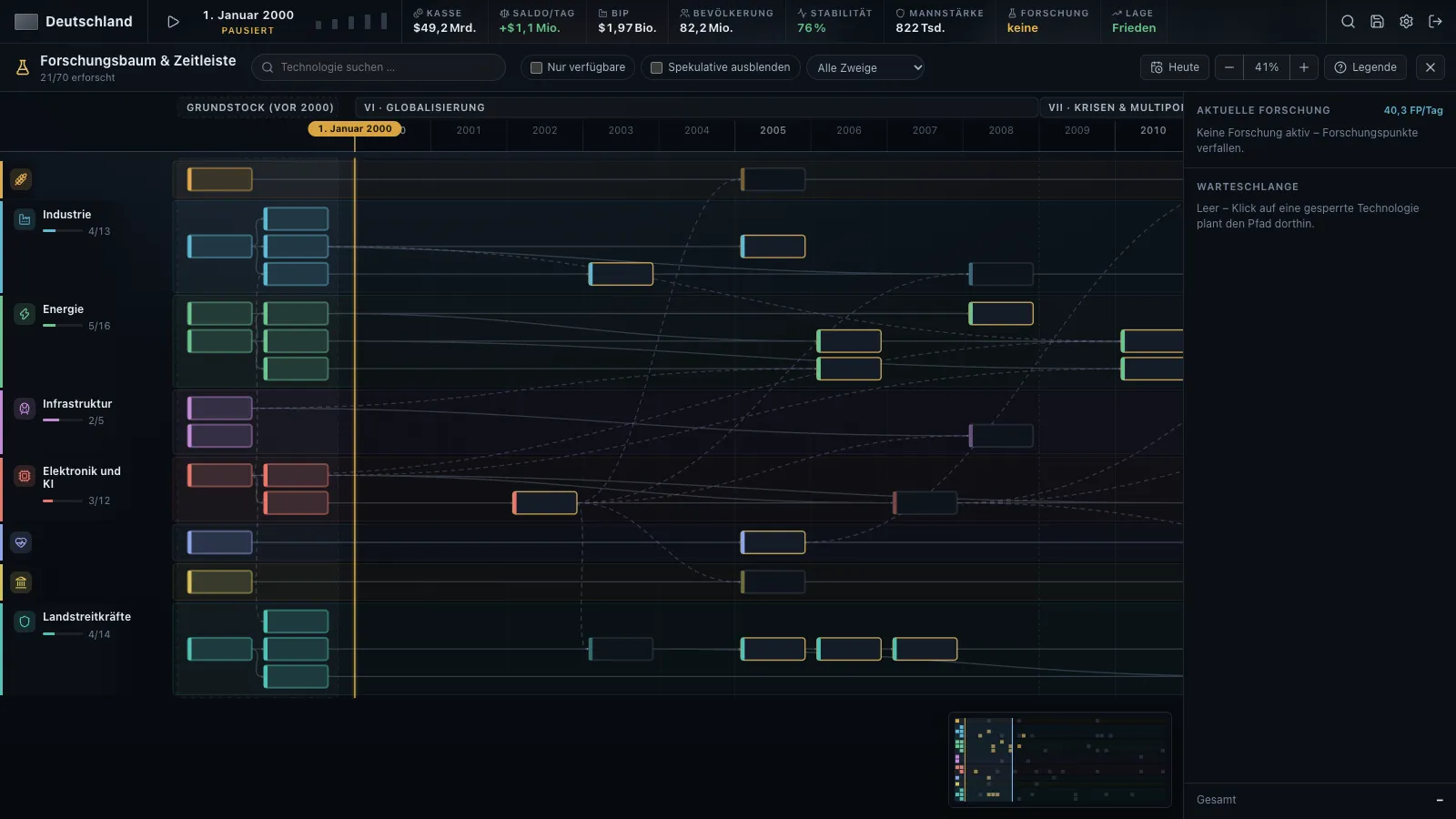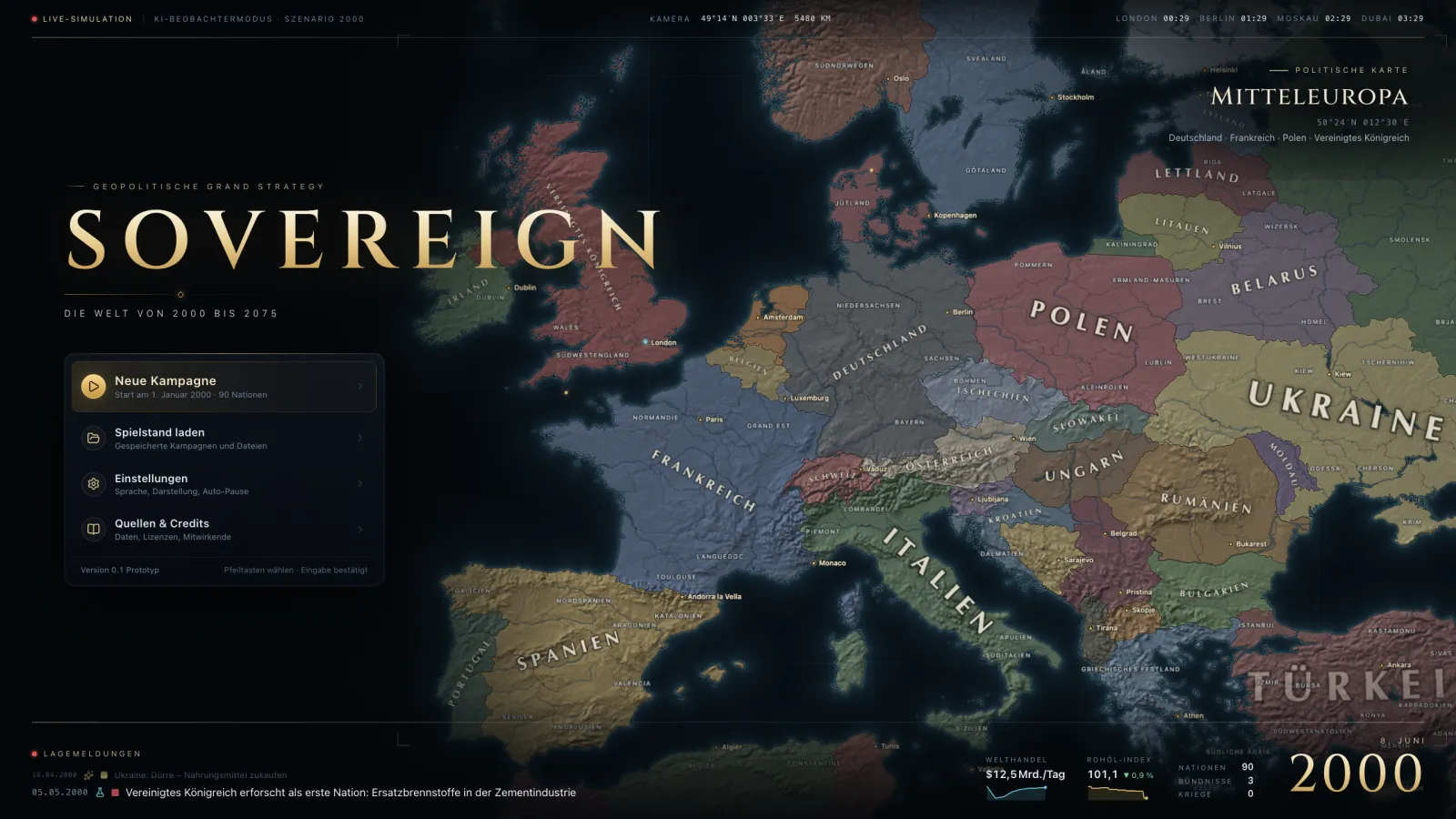
Epochs 2000–2075
Epochs are not levels. They emerge from technology, ideologies and world events – calculated per nation and shown globally. With them, technologies, resources, diplomacy and even the interface change.
No level boundaries, but development
Numbering starts at VI because epochs I–V (1900–1999) are reserved for later expansions.
From technology
New technologies, production methods and equipment generations move a nation into the next epoch – calculated per nation, shown globally.
From ideologies
Ideologies become relevant at certain times or under certain conditions and lose importance later. They are described neutrally and mechanically.
From world events
Historical events happen when the simulated world allows them – not because the calendar shows a year.
Globalisation
Free trade, the euro, the internet boom – the main campaign starts on 1 January 2000.
- Free trade, introduction of the euro, EU and NATO enlargement
- Internet boom, commodity boom, expansion of financial markets
- Asymmetric conflicts
Crises and Multipolarity
Financial crises, energy transition, sanctions – the world becomes multipolar.
- Financial and debt crises, sanction regimes
- Energy transition, supply chains, pandemic
- Cyber, drones, return of great-power conflicts
Near Future
AI economy, hydrogen, Arctic routes – speculative, derived from trends.
- AI economy and semiconductor sovereignty
- Robotics, battery and hydrogen economy
- Arctic routes and climate adaptation
Mid Future
Fusion, space industry, autonomous forces – the speculative future until 2075.
- Fusion and space industry (Moon, asteroids)
- Autonomous armed forces
- Climate migration, ageing populations, new forms of state
The interface moves with the times.
With every epoch the style of the HUD changes: from the sober situation room of the early 2000s through a glass interface and holographic accents to the minimalist interface of the future. This website copies it on its epoch pages.