Overview
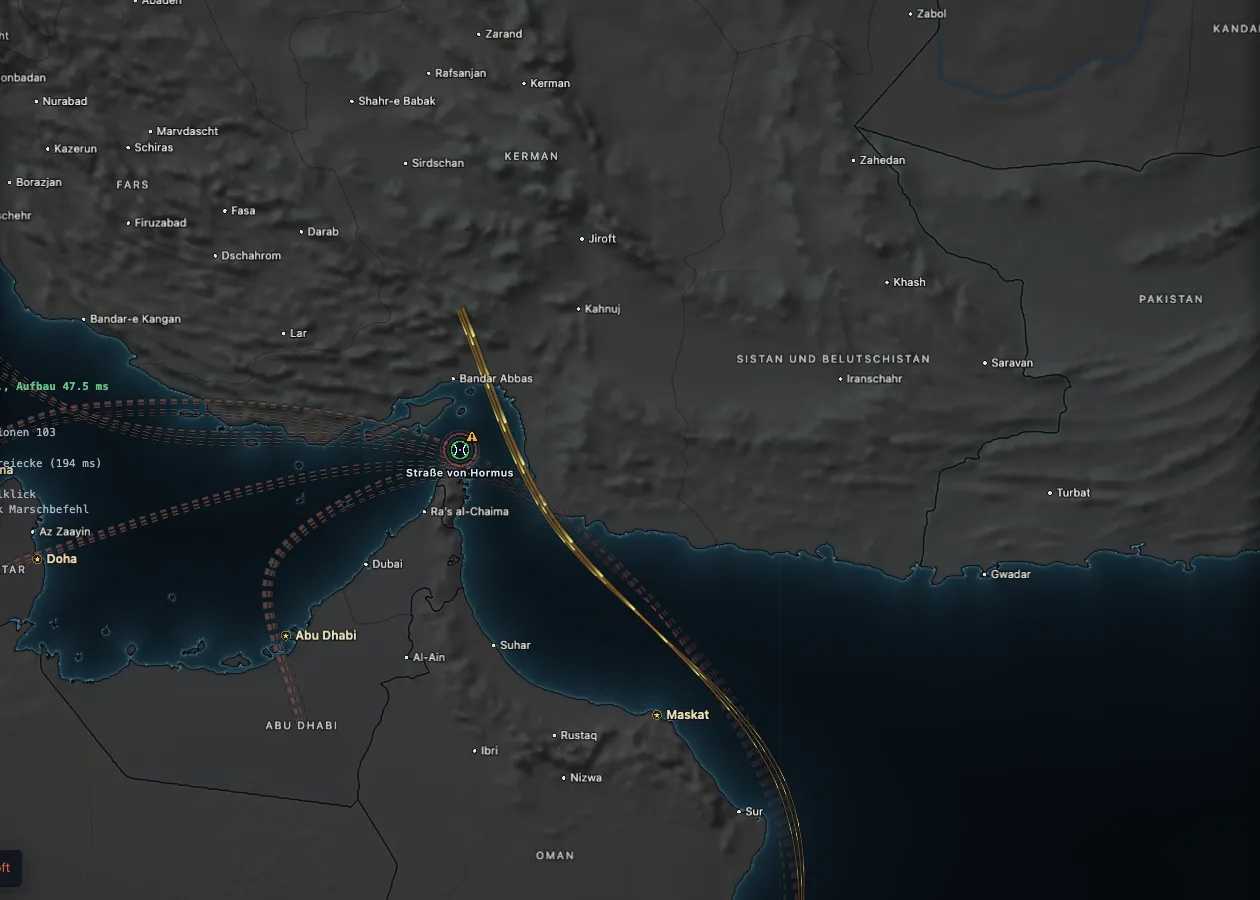
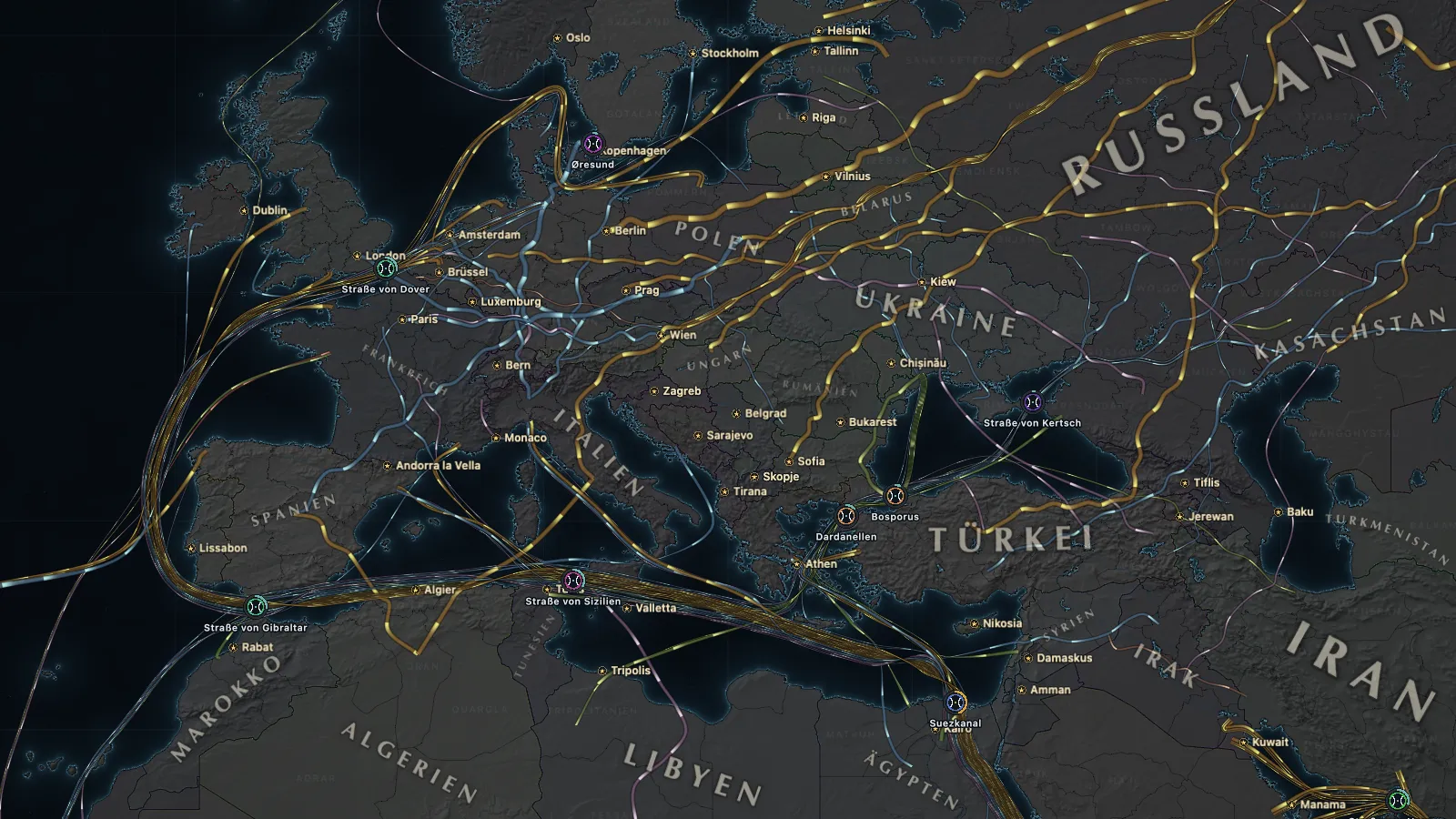
Every nation produces some goods in surplus and needs others. Each week the simulation connects exporters and importers into trade flows. You see these flows in the Trade map mode as glowing lines – the thicker, the more valuable.
How flows emerge
How much a nation buys or sells in total is decided by the shared world market: if stock falls below the buffer it imports, if stock is far above it exports. The flow model then assigns these amounts to individual partners.
A flow's route is always the shortest path from the exporter's hub (its capital province) to the importer's hub or to the world market at the map edge. Sea lanes are much cheaper than land routes; a port adds a surcharge.
Partners are preferred if they are close, in the same economic union or in the same military alliance. Per good, every nation keeps only its strongest partners; changes take effect gradually over several weeks.
For experts: the assignment
Route costs in km equivalents: land × 3 (with terrain factor), sea × 1, port + 250 km. Flows below 0.05 % of the good's volume are dropped. A flow without a new destination because of a blockade or embargo decays with the damping and is marked blocked. In addition, industrial nations exchange processed goods and services in both directions (intra-industry trade) – these flows show up in partner lists and chokepoint load but do not affect stocks or prices.
The chokepoints
A chokepoint is a strait or canal that sea routes have to pass. SOVEREIGN detects them automatically from the map. In the start region these are Gibraltar, Dover, Øresund/Belts, the Dardanelles, Kerch, Messina, Bonifacio, Suez, Bab-el-Mandeb and Hormuz. Whoever controls the adjacent provinces controls the chokepoint.
How much passes where?
In a ten-year test game with real start data, the share of total flow value was:
- Øresund / Belts
- 9.4 %
- Strait of Gibraltar
- 8.7 %
- Strait of Hormuz
- 7.4 %
- Bab-el-Mandeb
- 7.0 %
- Strait of Dover
- 4.2 %
- Bosporus / Dardanelles
- 2.8 %
- Suez Canal
- 2.6 %
Prototype measurement (Spec 20 §5a, Europe/MENA map, 10 years). The Bosporus is counted via the Dardanelles. In your game the shares shift with economy, wars and alliances – the map mode shows current values.
War, rerouting, blockade
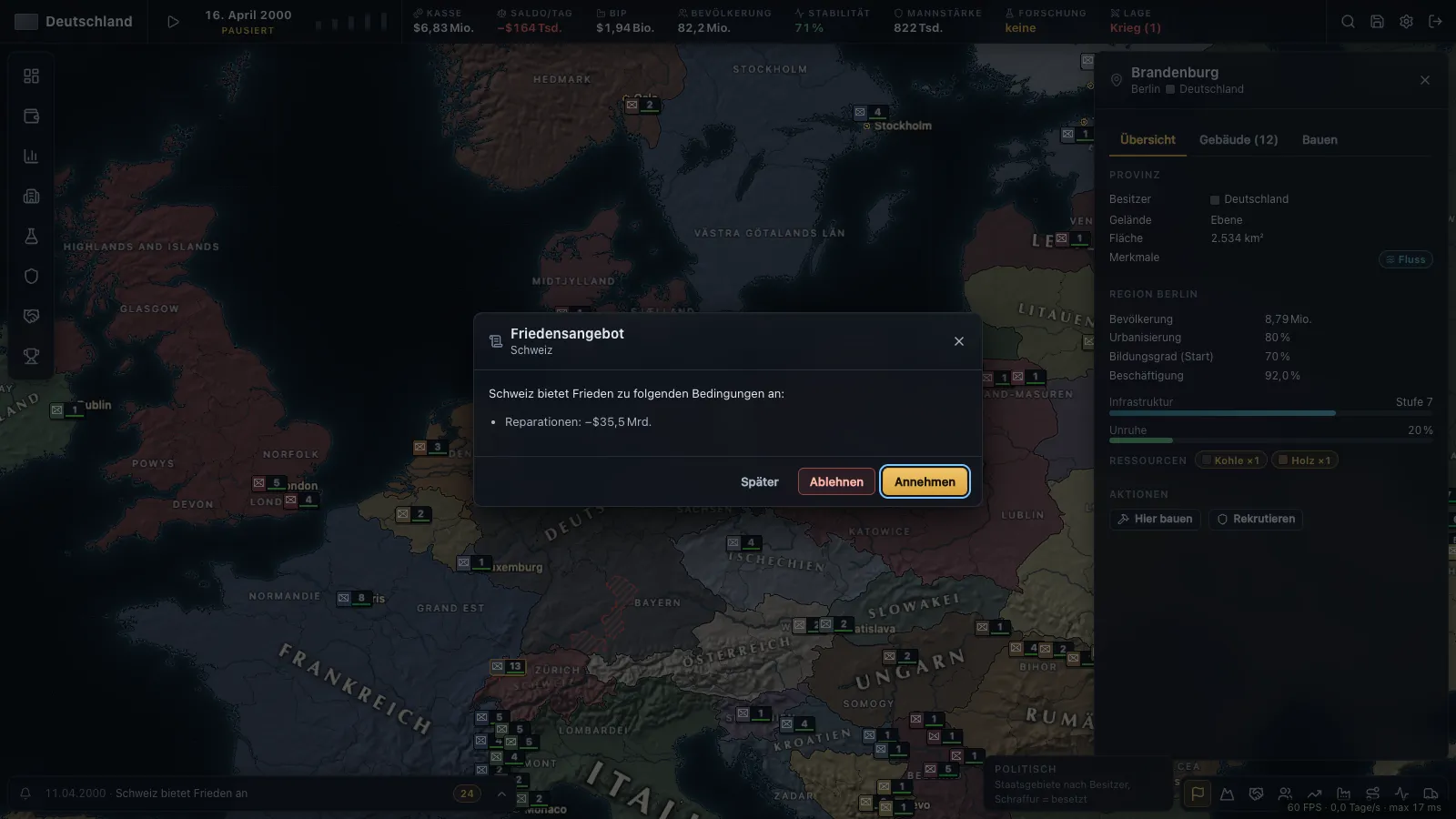
If one side of a trade is at war, routes may not cross provinces or chokepoints controlled by its enemies. Neutral territory stays passable. Then there are two outcomes:
- Rerouted: a longer path exists. The flow continues but becomes more expensive.
- Blocked: no path exists. The flow dries up until another partner is found. The game records which chokepoint blocks it.
Effect on prices
Every flow has a transport share that grows with distance. From it, every nation calculates its domestic price per good. Long routes make imports more expensive and depress export revenue. Blockades additionally remove deliveries in the short term – and are missing from world supply, which pushes the world market price up.
In the game you see the consequences in the “Why?” tooltip of every value, for example:
Example values for illustration.
Tips
- Spread your dependencies: source critical goods from partners on different routes.
- Stock as a buffer: automatic trade keeps about 30 days of demand in stock; your own trade orders in the market (F3) override it.
- Neutrality has value: neutral states at chokepoints stay passable in other nations' wars – a diplomatic trump card.
- Alliances lower costs: the affinity for union and alliance partners measurably shifts flows towards them.
For now, suggestions go through the Discord channel or the community page.
Derived from the specifications; measurements come from test runs of the prototype and are marked as such.